





Imagine waking up to a dozen apps pinging you before your coffee even brews. Emails, task lists, shared drives, calendar invites, and project boards all demanding attention at once. For many modern professionals, freelancers, and small business owners, this digital chaos feels normal. But what if there was a better way? Enter Acamento, a fresh approach that cuts through the noise and brings real operational clarity to your work and life.
Acamento started as a simple idea: subtract first, then build. It has grown into a practical system that helps you simplify workflows, automate what drags you down, and focus on what actually moves the needle. Whether you run a startup, manage a team, or juggle client work as a freelancer, Acamento offers a path from frantic doing to calm, structured progress. In the pages ahead, you will see exactly what it is, why it works, and how you can start using it today.
The Digital Overwhelm So Many of Us Face
Remote work, cloud tools, and constant connectivity promised freedom. Instead, they often deliver more tabs, more logins, and more mental load. A recent study found that knowledge workers switch between apps up to 1,200 times per day. That constant context switching kills focus and leaves people exhausted by lunchtime.
Small business owners tell similar stories. One entrepreneur I spoke with described her week as “a hundred tiny fires and no time to think strategically.” Freelancers feel the pinch too, bouncing between invoicing apps, proposal templates, and client chat threads. The result? Burnout, missed opportunities, and the nagging sense that you are busy but not productive.
Acamento steps in here. It does not add another tool to your stack. It helps you strip away what no longer serves you.
What Exactly Is Acamento?
At its heart, Acamento is both a philosophy and a digital management platform. The philosophy rests on the idea of subtraction. Instead of layering on more features or tasks, you remove everything that does not directly support your core goals. Think of it like decluttering your home before you buy new furniture. You create space first, then fill it intentionally.
From this foundation, Acamento evolved into a unified digital system. It brings your tasks, communications, files, and processes into one calm workspace. No more hunting through Slack for a decision or digging through Google Drive for the latest version of a document. Everything lives together, connected, and automated where it makes sense.
The name itself comes from the Portuguese word “acabamento,” meaning the final polish that makes something complete and beautiful. Acamento applies that same care to your workflows. It finishes what most systems leave messy.
The Philosophy of Subtraction: Acamento’s Secret Sauce
Subtraction sounds simple, but it changes everything. Most productivity systems tell you to add more: more planners, more templates, more habits. Acamento flips the script. It asks three powerful questions:
- What is the one outcome that matters most right now?
- What steps or tools no longer serve that outcome?
- What remains once the extras disappear?
By answering honestly, you create clarity fast. One small business owner used this approach to cut her weekly meeting time in half. She removed status updates that could happen in a shared dashboard and kept only the conversations that truly needed voices. The team felt lighter and more focused almost immediately.
This philosophy of subtraction works at any scale. For personal productivity, it might mean deleting three rarely used apps and routing everything through one calm interface. For organizational scaling, it means mapping every process and eliminating duplicated approvals. The result in both cases is the same: less friction, faster decisions, and more energy for creative work.
From Philosophy to Platform: Acamento’s Digital Tools
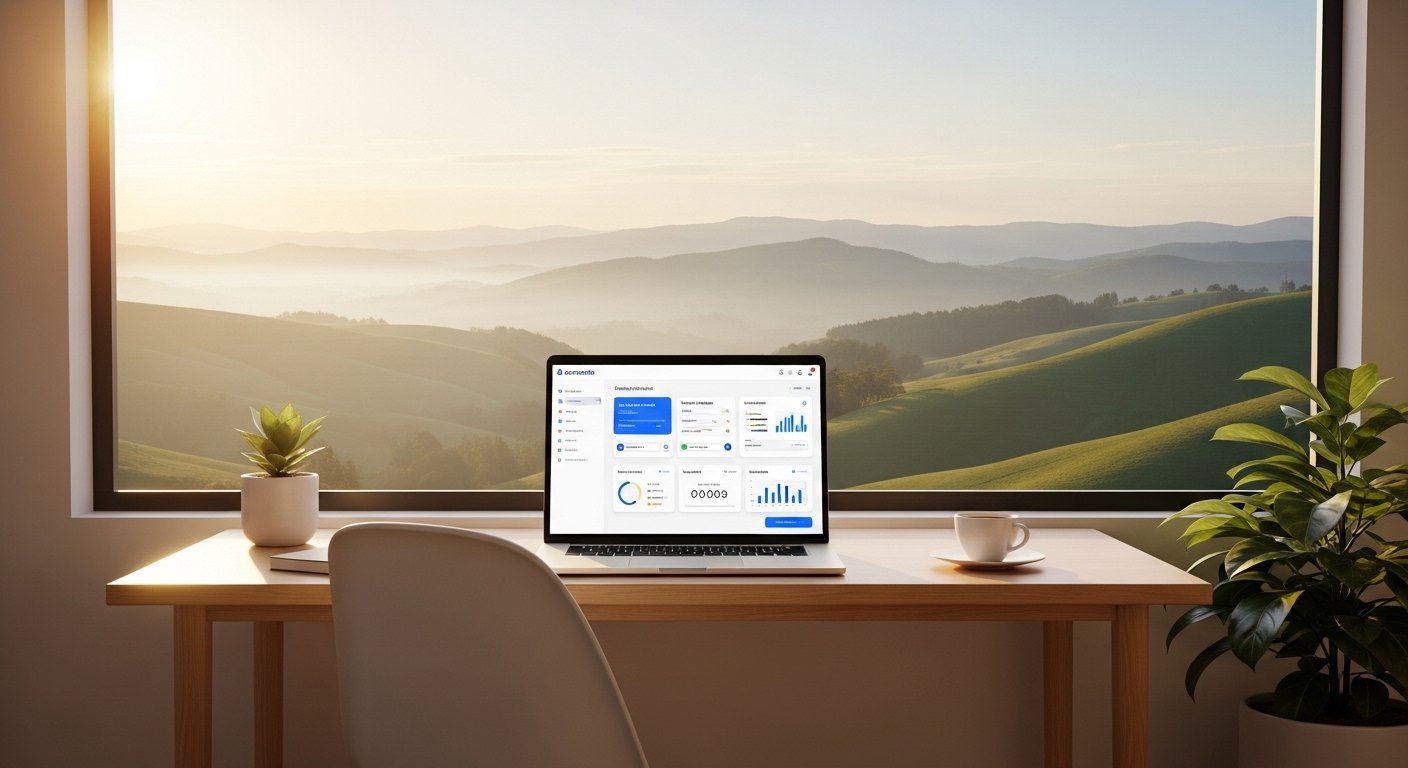
The beauty of Acamento lies in how it turns big ideas into daily ease. The platform itself acts as a single source of truth. You connect your existing tools once, then work inside a clean, customizable workspace.
Here are some standout features that make the difference:
- Unified Dashboard: See tasks, deadlines, team updates, and key metrics in one glance. No app switching required.
- Smart Process Mapping: Drag-and-drop tools let you visualize workflows, spot bottlenecks, and simplify them on the spot.
- Task Automation: AI handles repetitive steps like sending follow-up reminders, updating project statuses, or pulling weekly reports.
- Collaboration Without Chaos: Built-in chat, file sharing, and real-time editing keep everything in context instead of scattered across platforms.
- Analytics for Clarity: Simple visuals show where time goes and what delivers results, so you can keep subtracting what does not work.
These are not flashy gimmicks. They exist to support the subtraction philosophy. The platform quietly removes complexity so you can stay in flow.
Acamento vs Asana: A Straightforward Comparison
People often ask how Acamento stacks up against popular tools like Asana. Both help with tasks, yet they approach work differently.
Asana shines at detailed project tracking with many boards, timelines, and custom fields. It works well when you need structure for large, complex initiatives. However, it can add layers of complexity if you are not careful. Teams sometimes end up with too many rules and views, which leads right back to overwhelm.
Acamento takes the opposite route. It starts by asking you to remove before you organize. The platform integrates with tools like Asana if you need them, but its default is simplicity. Instead of dozens of custom fields, you get focused views built around outcomes. Users report that Acamento feels lighter and more intuitive for daily work, especially for small teams and freelancers who want results without heavy admin.
In short, use Asana when you need heavy-duty coordination. Choose Acamento when you want operational clarity and less daily friction.
Real Benefits for the People Who Need It Most
Freelancers love Acamento for personal productivity. One graphic designer told me she used to spend twenty minutes every morning just opening apps and finding files. Now everything opens in one workspace. She bills more hours because admin time dropped dramatically.
Small businesses gain operational clarity that supports growth. A boutique marketing agency mapped its client onboarding process with Acamento and removed three unnecessary approval steps. Delivery time improved by 40 percent, and the team stopped working weekends.
Startups find Acamento perfect for scaling without chaos. When headcount grows, processes that once lived in someone’s head get mapped and automated. Founders keep strategic focus instead of drowning in operations.
Even individuals fighting digital complexity benefit. Parents balancing side hustles or students managing group projects discover they can reclaim evenings when their digital life finally feels organized.
How to Implement Acamento in Your World
Getting started is refreshingly straightforward. You do not need weeks of training or a big budget.
Begin with a quick audit. List every tool and process you use in a typical week. Circle anything that feels heavy or redundant. That is your subtraction list.
Next, map one core workflow. Choose something you do often, such as client intake or weekly planning. Draw it out simply, then remove or automate at least two steps.
Sign up for the Acamento platform and connect your must-have tools. Spend one focused hour setting up your dashboard. Most people see immediate relief here.
Finally, build the habit of weekly review. Ask: What still feels heavy? Subtract it. Over time, this rhythm becomes natural.
For teams, start small. Run a one-hour workshop where everyone shares one process they want to simplify. The shared wins build momentum fast.
Success Stories That Show It Works
Sarah, a freelance copywriter, implemented Acamento for personal productivity. She cut her tool count from seven to one and doubled her client capacity without adding hours. “I finally have space to think creatively again,” she says.
Tech startup founder Marcus used the framework during a funding round. By mapping investor reporting with Acamento’s automation, his team saved fifteen hours a month. The clarity helped them close the round two weeks early.
A small e-commerce business owner applied process mapping to order fulfillment. Removing duplicate data entry steps reduced errors by 70 percent and freed her to focus on product strategy. These stories are not rare. They happen when people commit to subtraction first.
Three Actionable Tips to Try Today
- Pick one workflow and subtract two unnecessary steps. Notice how much lighter it feels.
- Create a single “home base” dashboard in Acamento that pulls in your top three tools. Use it for one full day.
- Schedule a recurring fifteen-minute clarity review every Friday. Ask what you can remove next week.
Small experiments like these compound into big changes.
Acamento proves you do not need more tools or more hustle to get ahead. You need clarity, simplicity, and the courage to subtract. If you feel buried under digital noise, this framework offers a calm, practical way forward. Give it a week. You might be surprised how much lighter and more effective your work becomes.
You May Also Like: Investing in Quality: Why Durable Boots Are Worth the Splurge
FAQs
What exactly does Acamento mean?
Acamento is a clarity-first framework built on subtraction. It helps you remove unnecessary complexity from workflows and then supports the streamlined system with a unified digital management platform.
Is Acamento just another task manager?
No. While it handles tasks, its real power lies in the philosophy of subtraction combined with smart automation and process mapping. It focuses on outcomes rather than endless to-do lists.
How does Acamento help freelancers?
It reduces app switching, automates admin, and gives one clean workspace for client work, invoices, and creative time. Many freelancers report reclaiming several hours each week.
Can small businesses use Acamento for scaling?
Absolutely. The process mapping and automation features keep operations simple even as teams grow. You avoid the usual growing pains that come with added complexity.
Does Acamento replace tools like Asana or Slack?
It can integrate with them and often reduces the need for multiple separate apps. Many users keep one or two favorites but manage everything from inside Acamento.
How long until I see results?
Most people notice less overwhelm within the first few days of setting up their workspace. Deeper workflow improvements appear after two or three weeks of consistent use.
Is Acamento suitable for personal productivity?
Yes. Individuals use it to organize life admin, side projects, or family schedules. The same principles of subtraction and clarity apply whether you manage a business or your own day.